Why Duct Design Matters More Than the AC Unit Itself
When homeowners think about replacing or upgrading an air conditioning system, the focus usually goes straight to the equipment. They want to know the brand, SEER rating, tonnage, warranty, and price. Those are all important factors, but they are not always what determines whether the system will actually cool the home well.
In many cases, duct design has a bigger impact on comfort and day-to-day performance than the AC unit itself.
A high-quality air conditioner can only do its job if the air it produces is delivered properly throughout the home or building. If the duct system is poorly designed, undersized, leaking, unbalanced, or routed incorrectly, even an excellent AC unit may struggle to maintain comfort, control humidity, and operate efficiently.
For homeowners and business owners in Pinellas County, this is especially important. HVAC systems in Florida often run for long periods in hot, humid conditions. That means any weakness in the duct system tends to show up faster through uneven temperatures, high utility bills, excessive run times, and avoidable repair issues.
The AC Unit Conditions the Air, but the Duct System Delivers It
The air conditioner is responsible for removing heat and humidity from indoor air. But once that air is cooled, the duct system is what carries it to the rooms where people actually live and work.
If that delivery system is flawed, the results inside the property will be flawed too.
That is why a home can have a newer AC unit and still deal with:
- hot and cold spots
- weak airflow in certain rooms
- humidity problems
- noisy operation
- longer cooling cycles
- rooms that never seem comfortable
A homeowner in Belleair may assume their AC unit is not strong enough because one side of the house stays warm in the afternoon. In reality, the equipment may be working correctly while the
duct system is failing to distribute air where it is needed.
Poor Duct Design Can Make a Good AC Unit Look Bad
One of the biggest misunderstandings in HVAC is assuming that comfort problems automatically mean the equipment is the problem.
A poorly designed duct system can make even a high-efficiency system perform poorly. That happens because the AC unit depends on proper airflow to move conditioned air through the home and back to the system again. If the ducts are undersized, poorly routed, leaking, or imbalanced, the system cannot operate the way it was intended.
This can lead homeowners to replace the AC unit when the deeper issue is really the ductwork. Then, after the new unit is installed, many of the same comfort problems remain.
That is one reason experienced HVAC contractors look at the full air distribution system rather than treating the AC unit as the only thing that matters.
Airflow Starts With Duct Design
Proper airflow is one of the foundations of HVAC performance. The duct system has to be designed to move the right volume of air to and from the equipment.
That includes:
- supply duct sizing
- return duct sizing
- duct routing
- branch distribution
- register placement
- static pressure management
If these elements are not designed correctly, the AC system may struggle from the beginning.
For example, if supply ducts are too small, rooms may not receive enough airflow. If return ducts are inadequate, the system may not be able to pull enough air back in for proper circulation. In either case, the equipment is put under strain, and comfort suffers.
The AC unit itself may be capable of cooling the home, but without the right duct design, that cooling will not be delivered effectively.
Uneven Temperatures Are Often a Duct Problem First
One of the most common comfort complaints in homes is uneven cooling. One room feels great, another feels warm, and another never seems to catch up during the hottest part of the day.
Homeowners often assume the system needs to be larger, but uneven cooling is very often tied to duct design.
Common duct-related causes include:
- long duct runs serving distant rooms
- poor branch sizing
- weak return airflow
- supply imbalance
- air leakage in attic ductwork
- poor register placement
A home in Pinellas County may have a back bedroom that stays warmer every afternoon. The issue may not be the AC unit size at all. It may be that the duct run to that room is too restrictive, leaking air in the attic, or simply not designed to deliver enough cooling to that part of the home.
Replacing the AC unit alone will not fix that type of problem.
Duct Leaks Waste Conditioned Air Before It Reaches the Living Space
Even if the duct layout is reasonable, leakage can undermine system performance.
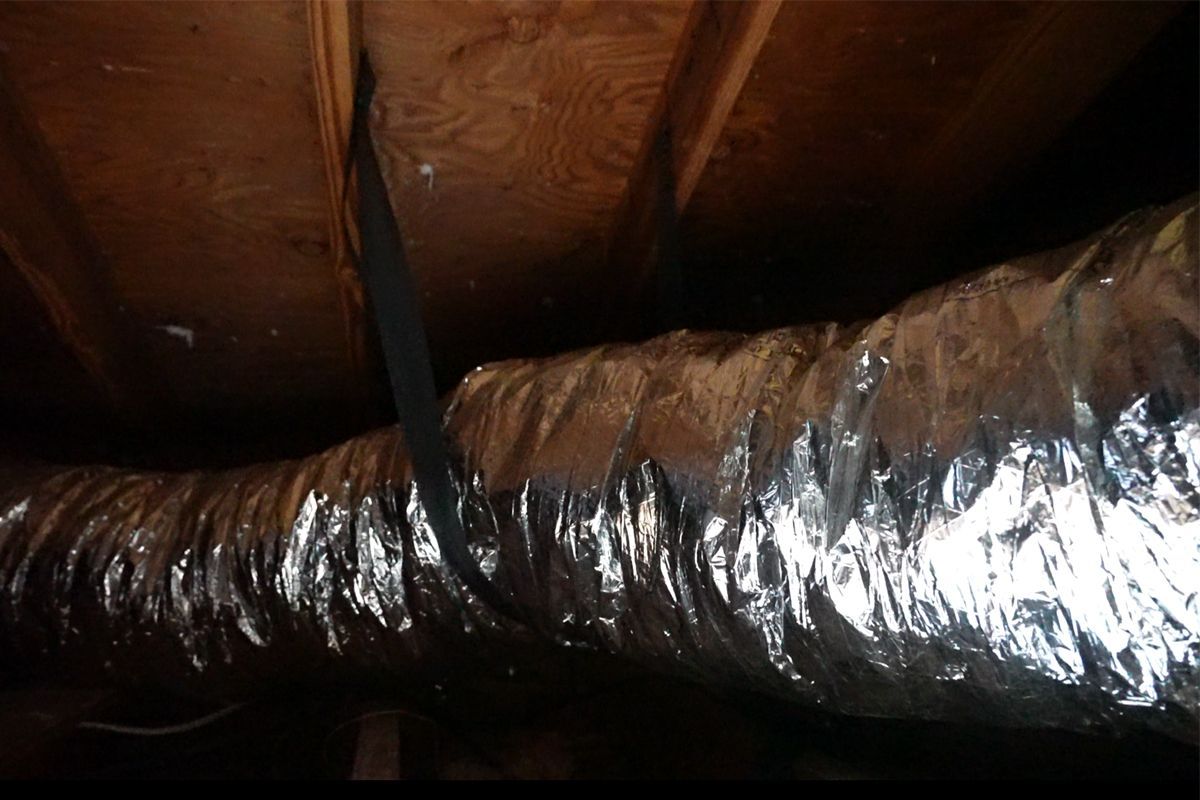
In many Florida homes, ductwork runs through extremely hot attic spaces. If the ducts have unsealed joints, damaged sections, or loose connections, conditioned air can leak out before it reaches the rooms below. At the same time, hot attic air may be drawn into the system through return-side leaks.
This creates multiple problems at once:
- lost cooling capacity
- longer run times
- higher utility bills
- reduced comfort
- added system strain
A homeowner may believe the AC unit is underperforming, when in reality the equipment is cooling properly but the duct system is losing part of that cooled air before it ever reaches the home.
That is why duct performance often has a bigger day-to-day effect on comfort than the equipment rating printed on the outdoor unit.
Return Air Design Is Often Overlooked
A lot of attention goes to supply ducts because they deliver cooled air into the rooms. But return air design is just as important.
The return side of the system is what pulls indoor air back to the air handler so it can be filtered, cooled, and recirculated. If the return is undersized, poorly located, or restricted, the entire system has to work harder.
Poor return design can lead to:
- reduced airflow
- pressure imbalances
- noisy operation
- weak cooling in some rooms
- more blower strain
- reduced overall efficiency
This is especially common in older homes where the original duct system may not reflect how the space is used today. Renovations, room additions, and layout changes can all make an older return design less effective.
A properly selected AC unit still will not perform correctly if return airflow is inadequate.
Oversized or High-Efficiency Equipment Cannot Compensate for Bad Ductwork
Many homeowners think the solution to comfort issues is a more powerful system. But oversized equipment or premium-rated equipment cannot fully compensate for poor duct design.
In fact, installing a larger AC unit on a poor duct system can create even more problems. If the ductwork cannot handle the airflow demands of the equipment, static pressure can increase, airflow can remain uneven, and the system may short cycle. That can reduce humidity control and increase wear on important components.
The same is true of high-efficiency systems. A high-SEER unit may offer excellent potential performance, but if the duct system is leaking, restrictive, or poorly balanced, the homeowner may never experience the full benefit of that efficiency.
In other words, the AC unit can only perform as well as the air distribution system allows.
Duct Design Directly Affects Humidity Control
In Florida, comfort is not just about temperature. Humidity control is a major part of whether a home feels comfortable.
When duct design is poor, airflow often suffers. That can affect how air moves across the evaporator coil and throughout the house. If cooling is uneven or circulation is weak, humidity may remain higher in certain areas even when the thermostat reading seems acceptable.
This is why some homeowners say the home feels cool but still feels damp or sticky. The issue may not be the AC unit itself. It may be that poor airflow and duct imbalance are affecting how moisture is removed and distributed indoors.
For homes in Belleair and throughout Pinellas County, that makes duct design even more important than many people realize.
Poor Duct Design Can Increase Repair Costs Over Time
Duct problems do not just affect comfort. They can also contribute to more HVAC wear and repair issues.
When airflow is restricted or imbalanced, the system often runs longer and works harder. Over time, that can affect:
- blower motors
- evaporator coils
- compressors
- capacitors
- fan motors
- electrical components
A system that constantly fights airflow issues may develop frozen coils, longer run times, and elevated static pressure. Those operating conditions increase strain across the equipment.
This means poor duct design can indirectly shorten the life of the AC unit. In that sense, the duct system does not just influence comfort. It influences reliability and repair costs as well.
Comfort Problems Often Start in the Duct System, Not at the Equipment
This is one of the biggest reasons duct design matters so much. Many HVAC complaints that appear to be equipment problems are actually air delivery problems.
For example:
- one story cools differently than another
- certain rooms feel stuffy
- airflow seems weak at some vents
- the home cools slowly in the afternoon
- the thermostat satisfies, but parts of the home still feel uncomfortable
These are often signs that the cooled air is not being distributed well, not necessarily that the AC unit cannot produce enough cooling.
A complete HVAC approach means evaluating where the air is going, how it is getting there, how it is returning, and whether the duct system supports the actual needs of the property.
Duct Design Outweighing Equipment Quality
A homeowner in Pinellas County replaces an older AC system with a newer high-efficiency unit expecting major improvements in comfort and utility bills. After installation, the home cools somewhat better, but two bedrooms still stay warm, airflow feels weak at several vents, and the system seems to run longer than expected.
After further inspection, the real issues turn out to be undersized supply runs, return limitations, and duct leakage in the attic. The new equipment is not the root of the problem. The duct system is limiting what that equipment can do.
Once the duct issues are corrected, comfort improves more noticeably, airflow becomes more consistent, and the system performs closer to what the homeowner expected from the beginning.
That is a common example of why duct design often matters more than the AC unit itself.
New HVAC Installations Should Never Ignore the Duct System
When installing a new HVAC system, it is not enough to focus only on the equipment selection. A proper installation should also evaluate:
- duct sizing
- supply and return balance
- airflow demands by room
- leakage points
- insulation on attic ductwork
- register performance
- overall static pressure
Without that evaluation, a homeowner can spend money on a quality system while leaving major performance problems untouched.
In many homes, improving or correcting the duct system can make just as much difference as replacing the equipment, and sometimes more.
Why This Matters So Much in Pinellas County
In Pinellas County, HVAC systems deal with long cooling seasons, high humidity, and demanding attic conditions. Those factors put constant pressure on both the equipment and the duct system.
If the duct design is weak, the effects tend to show up quickly through uneven cooling, wasted energy, and reduced humidity control. Homes near the coast may also deal with attic conditions and heat loads that make proper duct performance even more important.
For local homeowners, the duct system is not a minor part of HVAC performance. It is one of the main reasons a system either succeeds or struggles.
Duct design matters more than the AC unit itself because the duct system determines how efficiently and effectively conditioned air is delivered throughout the property. Even the best air conditioner cannot perform well if airflow is restricted, rooms are not balanced properly, return design is weak, or cooled air is leaking into the attic.
At
Williams Air Solutions, we take a complete system approach to HVAC service and installation in Belleair and throughout Pinellas County. That means looking beyond the equipment and evaluating the ductwork, airflow, and overall system design that shape real-world comfort. A quality AC unit is important, but without the right duct design behind it, it may never perform the way it should.
Call Williams Air Solutions at (727) 353-0090 to schedule AC service anywhere in Pinellas County.