How Electrical Surges Can Damage HVAC Systems
Most homeowners think of electrical surges as a threat to televisions, computers, and kitchen appliances. What many do not realize is that HVAC systems are also vulnerable to surge-related damage. In fact, modern heating and cooling equipment contains sensitive electrical components that can be affected by even brief voltage spikes.
For homeowners and business owners in Pinellas County, this is an important issue. Florida weather brings frequent thunderstorms, heavy rain, lightning activity, and power fluctuations that can create ideal conditions for electrical surges. Even when the power outage seems minor or the system starts back up afterward, that does not always mean the equipment escaped damage.
Electrical surges can weaken HVAC components immediately or cause hidden damage that leads to future breakdowns. In many cases, a property owner does not realize a surge was the real cause until the system begins short cycling, stops cooling properly, or fails altogether.
What an Electrical Surge Actually Is
An electrical surge is a sudden spike in voltage moving through the electrical system. HVAC equipment is designed to operate within a normal voltage range. When voltage rises above that range, even for a fraction of a second, it can damage parts that rely on stable electrical flow.
Surges can happen because of:
- lightning strikes nearby
- utility grid switching
- power outages and restoration
- faulty wiring
- large appliances cycling on and off
- electrical issues inside the home or commercial building
Many people assume surges only happen during major storms. In reality, smaller surges can happen much more often than expected, and repeated minor surges can be just as damaging over time.
Why HVAC Systems Are Vulnerable
Older HVAC equipment was more mechanical in nature, but today’s systems rely heavily on electrical and electronic controls. That includes thermostats, circuit boards, communication modules, variable-speed motors, and safety controls.
Because of that, modern systems are more efficient and more precise, but they are also more sensitive to voltage irregularities.
A surge can affect:
- the thermostat
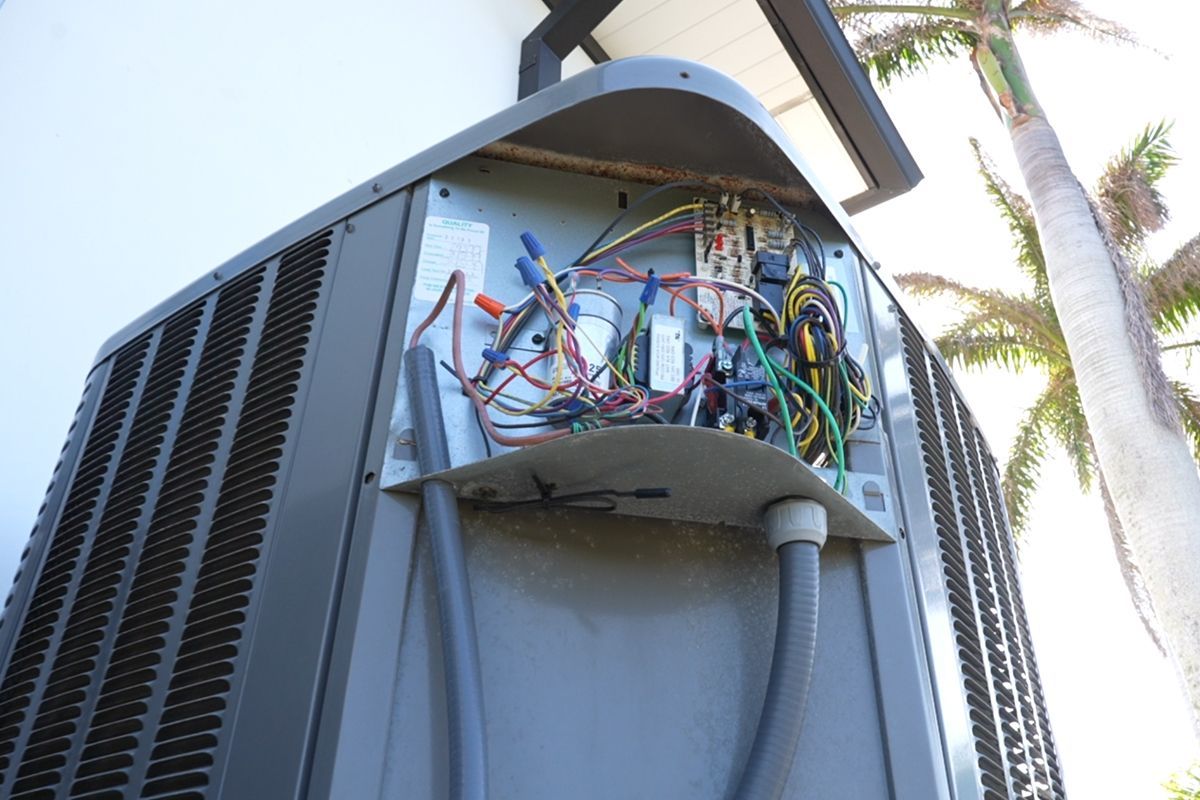
- control boards
- contactors
- capacitors
- blower motors
- condenser fan motors
- compressors
- communication wiring between system components
That means one surge event can lead to anything from a
minor control issue to a major repair involving some of the most expensive parts of the system.
Control Boards Are Often One of the First Casualties
One of the most common ways surges damage HVAC systems is through the control board. The control board acts as the system’s central command point, helping different components start, stop, and communicate correctly.
When a surge hits, the control board can burn out, partially fail, or suffer damage that causes irregular behavior. In some cases, the system may stop responding completely. In others, the unit may still run but behave unpredictably.
A homeowner in Belleair may notice that after a storm,
the thermostat
is calling for cooling but the system is not responding the same way it normally does. The unit may turn on and off at odd times, fail to complete a cycle, or stop communicating with the thermostat altogether. Those are the kinds of symptoms that often point back to electrical damage rather than a basic mechanical problem.
Compressor Damage Can Lead to Expensive Repairs
The compressor is one of the most important components in an air conditioning system, and it is also one of the most expensive to replace. Electrical surges can damage the compressor directly or affect the components that help it start and run properly.
A large enough surge can stress the compressor windings or damage related electrical parts. Even if the compressor does not fail right away, its performance may be compromised. Over time, that weakened condition can lead to overheating, hard starts, or complete failure.
This is one reason HVAC surge protection matters so much. A property owner may think the system came through a power event without a problem because it restarted. But internal stress may already have taken place, and the compressor may fail weeks or months later.
Capacitors and Contactors Are Commonly Affected
Capacitors and contactors are two other parts frequently affected by power surges.
Capacitors help start and run motors, including the compressor and fan motors. A voltage spike can weaken or damage a capacitor, making it harder for those motors to operate correctly. The result may be hard starting, humming noises, intermittent cooling, or a system that stops working altogether.
Contactors are responsible for allowing electrical current to reach key HVAC components. A surge can pit, weld, or damage the contact surfaces, which may cause inconsistent operation or total system failure.
These parts are smaller than the compressor, but they are critical to system operation. In many cases, a technician diagnosing a no-cooling call after a storm may find that a surge damaged one or both of these components.
Blower Motors and Fan Motors Can Also Suffer Damage
When homeowners think about surge damage, they often focus on the outdoor unit. However, indoor components can be affected as well.
Blower motors inside the air handler and fan motors in the outdoor condenser both rely on proper electrical input. A surge can shorten motor life, damage windings, or affect speed controls in systems that use variable-speed technology.
In practice, this may show up as:
- reduced airflow
- unusual noises
- fan motors failing to start
- inconsistent cooling performance
- overheating during operation
Because these symptoms can look similar to normal wear and tear, surge-related damage is not always obvious without a proper inspection.
Thermostats and Communication Systems Are More Sensitive Than Many People Realize
Modern thermostats and communicating HVAC systems are convenient, accurate, and energy efficient, but they can be especially vulnerable to surge events.
A surge may damage:
- the thermostat screen or controls
- sensors
- low-voltage wiring
- smart thermostat connectivity
- communication between indoor and outdoor units
A homeowner may notice that after a power event, the thermostat is blank, no longer connected to Wi-Fi, reading the wrong temperature, or sending incorrect commands to the system. In some cases, the thermostat may still appear functional while the deeper issue lies in damaged low-voltage controls or communication boards.
For homes and businesses in Pinellas County using newer HVAC technology, this is a growing concern because more systems now depend on integrated electronics.
Surge Damage Is Not Always Immediate
One of the more frustrating parts of electrical surge damage is that it does not always shut the system down instantly. Sometimes the damage is immediate and obvious. Other times, it weakens a component and leads to failure later.
For example, a system may seem to restart normally after a thunderstorm, but then begin showing signs like:
- shorter cooling cycles
- trouble starting
- intermittent shutdowns
- poor communication with the thermostat
- higher energy use
- random error codes
In those cases, the property owner may not connect the issue to the earlier surge event. But the timing often tells the story. This is why HVAC problems that start shortly after storms or power interruptions should be inspected carefully rather than treated as routine wear.
Florida Weather Increases the Risk
In Pinellas County and the surrounding area, electrical surges are a practical concern because of how often storms and power fluctuations occur.
Florida properties deal with:
- frequent lightning activity
- summer thunderstorms
- sudden outages
- utility restoration events
- heavy demand on the electrical grid
Even a nearby lightning strike that does not directly hit the home or building can create a surge strong enough to affect HVAC equipment. Businesses are also at risk, especially those with larger systems, rooftop units, or properties that rely on steady indoor comfort for customers, staff, or equipment.
This makes surge protection more than an optional upgrade. In many cases, it is part of protecting a major investment.
Hidden Surge Damage
A homeowner in Pinellas County may experience a brief power outage during an afternoon storm. The power comes back on quickly, and the AC restarts, so everything seems fine. A few days later, the homeowner notices the system is running longer and not cooling as evenly as before. Two weeks later, the outdoor unit stops turning on altogether.
During the inspection, the technician finds electrical damage to a control component and signs that the surge likely stressed the capacitor as well. The system did not fail all at once. It suffered damage during the power event, then continued operating until the weakened part finally gave out.
This is a common pattern with HVAC surge damage. The failure that shows up later often started with a brief electrical event that seemed unimportant at the time.
Whole-Home and Dedicated HVAC Surge Protection Can Help
One of the best ways to reduce the risk of surge-related HVAC damage is with proper surge protection.
There are generally two levels of protection property owners consider:
- whole-home surge protection at the electrical panel
- dedicated HVAC surge protection installed for the heating and cooling system
Whole-home protection helps reduce the impact of surges entering through the electrical service. Dedicated HVAC protection adds another level of defense for the equipment itself.
This can be especially valuable for properties with:
- high-end HVAC systems
- variable-speed equipment
- smart thermostats
- communicating systems
- commercial HVAC equipment
- properties in storm-prone coastal areas
No protective device can guarantee that all damage will be prevented in every scenario, especially with a direct lightning strike, but surge protection can significantly reduce the risk from common voltage spikes and utility-related events.
Why Professional Diagnosis Matters After a Power Event
If an HVAC system begins acting differently after a storm, outage, or electrical event, it should not be ignored. A quick reset may get the system running again, but that does not mean the equipment is healthy.
Professional diagnosis helps identify whether a surge affected:
- electrical components
- system controls
- motors
- the compressor
- safety devices
- thermostat communication
Without a proper inspection, damaged parts may continue operating until they fail completely, often at the worst possible time.
For homeowners and businesses relying on steady air conditioning during Florida heat, early diagnosis can prevent a smaller repair from turning into a larger one.
Preventing Bigger Repairs Starts With Protection and Maintenance
Electrical surges are not always preventable, but the damage they cause can often be reduced with a proactive approach.
That includes:
- installing appropriate surge protection
- scheduling regular HVAC maintenance
- having the system inspected after major storms or power events
- addressing unusual behavior right away
- making sure electrical connections and components are evaluated during service
This is particularly important for newer HVAC systems, where one damaged electronic component can affect how the entire system performs.
Electrical surges can damage HVAC systems in ways that are immediate, gradual, or hidden until a larger problem develops. From control boards and thermostats to motors, capacitors, and compressors, surge-related damage can affect both residential and commercial equipment and lead to expensive repairs if it goes unnoticed.
For homeowners and businesses in Belleair and throughout Pinellas County, surge protection and professional HVAC inspection are important parts of protecting indoor comfort and equipment life. At Williams Air Solutions, we take a complete system approach to HVAC service so we can identify electrical issues, inspect storm-related concerns, and help keep your system operating reliably in Florida’s demanding conditions.
Call Williams Air Solutions at (727) 353-0090 to schedule a professional HVAC inspection anywhere in Pinellas County.