The Most Common HVAC Installation Mistakes (And How to Avoid Them)
Florida homeowners spend thousands investing in high-efficiency HVAC systems expecting lower energy costs and better comfort. Unfortunately, far too many new installations never deliver on those promises. Not because of faulty equipment, but because of avoidable installation mistakes.
At Williams Air Solutions, we routinely inspect newer systems across Pinellas County that are supposed to be top-tier energy performers — yet they still struggle with humidity, uneven cooling, and high electric bills. In most cases, the root cause traces back to improper installation practices.
Here are the most common HVAC installation mistakes we see, and exactly how to avoid them.
1. Skipping the Manual J Load Calculation
The Mistake:
Installing a system based on square footage estimates or simply matching the size of the old unit.
Why it’s a problem:
Homes change over time. New insulation, updated windows, additions, and duct modifications all affect cooling loads.
Incorrect sizing leads to:
- Oversized systems → short cycling and humidity problems
- Undersized systems → constant runtime and poor comfort
How to avoid it:
Only install systems sized using a full Manual J load calculation — the industry standard that considers insulation, windows, ceilings, layout, occupancy, and Florida humidity loads.
2. Improper Airflow Setup
The Mistake:
Failing to measure or balance airflow during installation.
Why it’s a problem:
HVAC systems rely on precise airflow volumes to operate efficiently. Without verification:
- Rooms cool unevenly
- Systems run longer
- Humidity control suffers
- Energy consumption spikes
How to avoid it:
Require airflow testing, blower adjustments, and static pressure measurements before final system commissioning.
3. Incorrect Refrigerant Charging
The Mistake:
Using factory default refrigerant levels without verifying performance under real conditions.
Why it’s a problem:
Even small errors in refrigerant charge cause:
- Poor cooling output
- Increased compressor stress
- Shortened equipment life
- Reduced moisture removal
Efficiency ratings only apply with perfect refrigerant calibration.
How to avoid it:
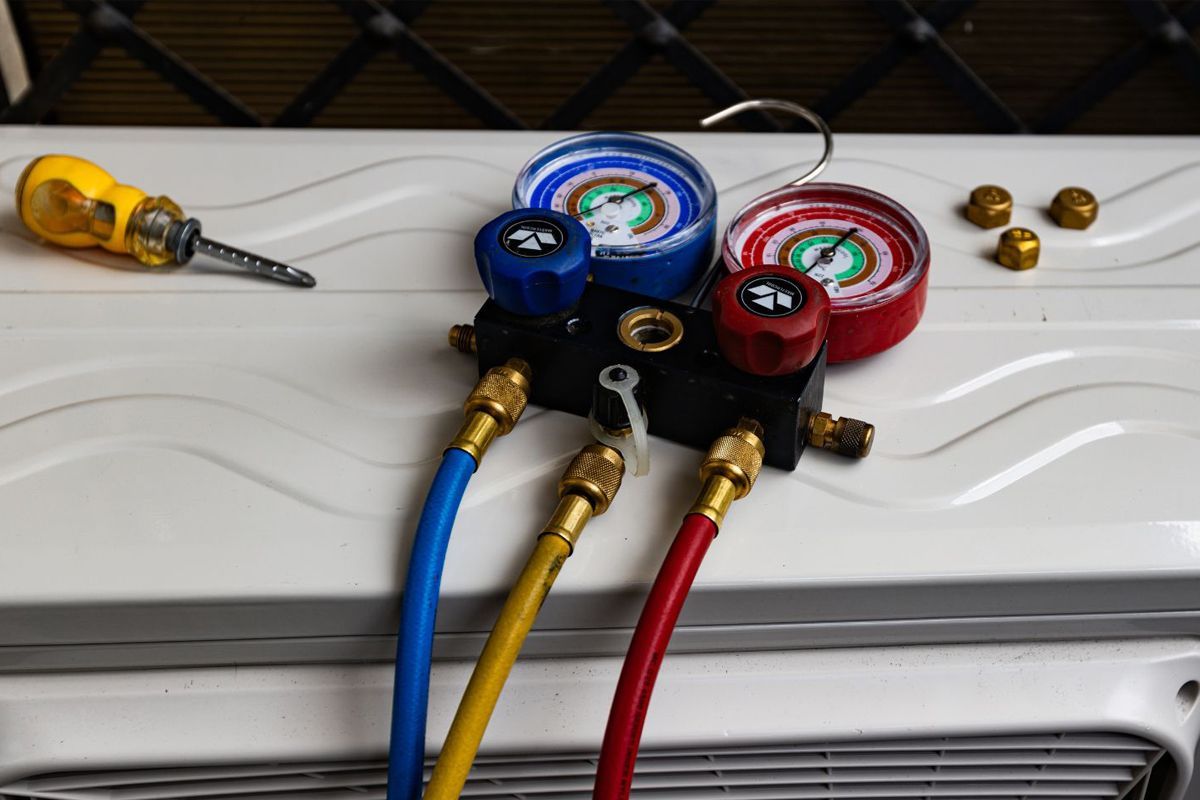
Ensure installers verify subcooling and superheat values — not just pressures.
4. Ignoring Existing Ductwork Problems
The Mistake:
Installing a new system without inspecting or sealing ductwork.
Why it’s a problem:
Leaking ducts, collapsed runs, or insufficient return airflow can waste up to 30% of cooled air — instantly destroying efficiency gains.
How to avoid it:
Perform duct inspections and sealing during installation. A new system cannot overcome faulty air delivery.
5. Poor Thermostat Placement and Setup
The Mistake:
Installing thermostats in poor locations or failing to program controls properly.
Why it’s a problem:
Wrong thermostat placement causes inaccurate readings and unnecessary cycle behavior.
This leads to:
- Short cycling
- Uneven comfort
- Excess energy use
How to avoid it:
Position thermostats away from heat sources or draft zones and program staged cooling and scheduling functions correctly.
6. Failing to Address Humidity Control
The Mistake:
Installing oversized equipment that cools quickly but removes little moisture.
Why it’s a problem:
Florida homes require moisture management as much as cooling.
Poor humidity control causes:
- Sticky air
- Mold risk
- Comfort complaints
- Excess energy usage as homeowners lower thermostat settings unnecessarily
How to avoid it:
Use properly sized systems and variable-speed equipment where appropriate, and evaluate whole-home dehumidification when needed.
7. No Commissioning or Testing After Installation
The Mistake:
Declaring the job “complete” without validating performance.
Why it’s a problem:
Without testing:
- Airflow issues remain undiscovered
- Refrigerant calibration errors persist
- Duct leaks go unnoticed
This step is essential to unlocking true system efficiency.
How to avoid it:
Professional HVAC commissioning must include:
✅ Airflow measurements
✅ Temperature split testing
✅ System pressure verification
✅ Control calibration
✅ Duct evaluations
Seminole Home Correction
A Seminole homeowner installed a new high-SEER system but experienced high bills and humidity discomfort. Williams Air Solutions discovered:
- Oversized equipment
- Improper airflow tuning
- Unsealed duct leaks
After corrective calibration:
✅ Humidity stabilized
✅ Cooling balanced evenly
✅ Electric bills dropped by 18%
The equipment didn’t change — the installation quality did.
The Truth About HVAC Installation
High efficiency ratings do not guarantee high efficiency performance.
True performance requires:
✔ Accurate load calculations
✔ Precision airflow setup
✔ Verified refrigerant charging
✔ Duct inspections and sealing
✔ Proper humidity management
✔ Full commissioning testing
When any of these steps are skipped, comfort and efficiency suffer, no matter how expensive the equipment may be.
Protect Your HVAC Investment
At Williams Air Solutions, every installation follows a strict quality process designed specifically for Florida climate demands. We engineer systems for real-world comfort, not just equipment replacement.
Call Williams Air Solutions at (727) 353-0090 to schedule a professional HVAC consultation or system evaluation today.