How Improper HVAC Installation Cancels Out High Efficiency Ratings
Homeowners often invest in high-efficiency HVAC systems expecting lower energy bills, better comfort, and longer equipment life. But across Pinellas County, we see the same frustrating scenario play out repeatedly:
A brand-new, high-SEER system still struggles to perform — energy bills stay high, humidity remains uncomfortable, and cooling feels inconsistent.
The truth is simple: no level of equipment efficiency can overcome poor installation practices. Even top-rated systems lose much of their potential if they’re sized, configured, or installed incorrectly.
At Williams Air Solutions, most performance issues we correct aren’t equipment defects — they’re installation flaws. Here’s exactly how improper HVAC installation can cancel out impressive efficiency ratings.
1. Incorrect System Sizing
Proper HVAC sizing is the single most important factor in efficiency and comfort, and the most frequently rushed or skipped step.
Oversized systems cause:
- Rapid short cycling
- Minimal moisture removal
- Uneven temperatures
- Increased electrical wear
Undersized systems cause:
- Continuous runtime
- Failure to reach desired temperatures
- Higher electrical usage
- Equipment overheating
Both conditions completely negate energy savings.
True sizing requires a full Manual J load calculation, not square-foot shortcuts.
2. Poor Airflow Design
Even a perfectly sized system performs poorly when airflow isn’t correctly balanced.
Common airflow installation mistakes:
- Ducts sized incorrectly for equipment capacity
- Restricted return air pathways
- Crushed or kinked duct runs
- Unsealed duct joints leaking into attic spaces
These problems cause:
- Longer system runtimes
- Hot/cold room imbalance
- Increased humidity
- Compressor overload
Airflow must meet manufacturer specifications for SEER ratings to actually be achieved.
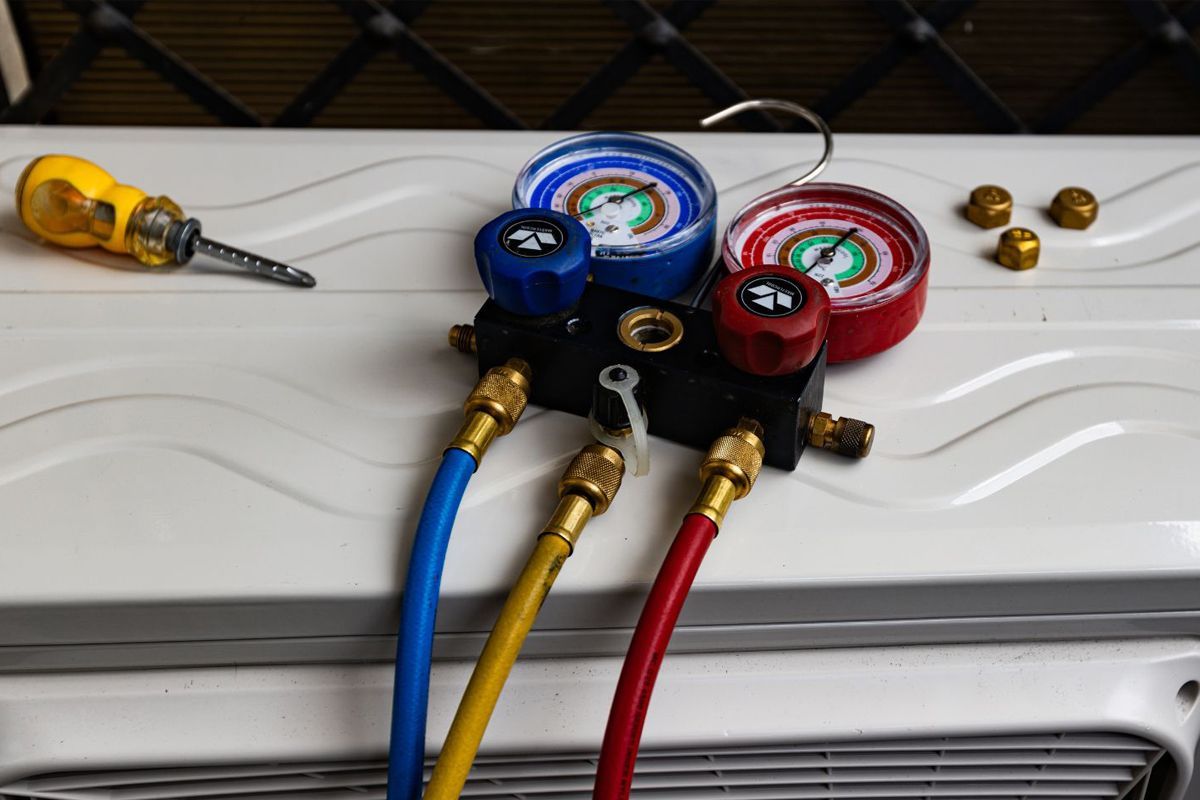
3. Incorrect Refrigerant Charging
Efficiency ratings assume precise refrigerant charge levels.
Even small errors result in:
- Reduced cooling capacity
- Poor humidity control
- Higher compressor amperage draw
- Substantial efficiency loss
Improperly charged systems never perform at published energy ratings — and compressor damage becomes likely over time.
4. Inadequate Duct Sealing and Insulation
Leaky attic ducts dump cooled air into extreme heat zones, forcing systems to run longer to compensate.
Lost airflow percentages of 15–30% are common in under-sealed systems.
Without duct sealing and insulation:
- Energy use rises
- Comfort declines
- AC runs longer than necessary
High-efficiency units simply move conditioned air faster, but leaks still waste the same energy.
5. Incorrect Equipment Setup and Calibration
HVAC systems require precise setup during installation:
Critical adjustments include:
- Fan speed selection
- Thermostat configuration
- Drain line slope and safety switch placement
- Zoning damper balancing
- Pressure testing
Missing any calibration steps leads to:
- Short cycling
- Drain backups
- Inefficient cooling cycles
- Poor zoned performance
These settings ensure the system runs within its tested performance envelope.
6. Ignoring Humidity Management Needs
High-efficiency systems don’t automatically solve humidity problems.
Oversized installations short cycle — barely removing moisture — forcing homeowners to lower thermostats and boost power usage.
Proper humidity control requires:
- Long cycle runtimes
- Correct airflow velocity
- Variable-speed fan programming
- Supplemental dehumidification when required
7. Lack of Post-Installation Performance Testing
One of the most damaging industry habits is skipping complete commissioning testing after installation.
Without testing:
- Airflow may remain unbalanced
- Refrigerant charge may remain off
- Duct leaks may never be discovered
Even high-SEER systems can operate at 50–70% of their potential efficiency without validation testing.
Belleair Home Performance Correction
A Belleair homeowner installed a new 18-SEER system through a previous contractor but saw little improvement in their electric bills.
Williams Air Solutions’ testing uncovered:
- Oversized equipment
- Incorrect refrigerant charging
- Unsealed attic ducts
- Restricted return airflow
After calibration and duct sealing corrections:
✅ Cooling stabilized
✅ Humidity balanced
✅ Monthly energy costs dropped by 21%
The equipment itself wasn’t the problem, the original installation was.
High-Efficiency Ratings Only Work When Installation Is Done Properly
Efficiency ratings published by manufacturers assume:
✅ Correct system sizing
✅ Proper airflow design
✅ Perfect refrigerant charging
✅ Sealed duct systems
✅ Calibrated controls
Miss any of those steps — and performance drops dramatically.
True efficiency comes from:
- Engineering precision
- Installation craftsmanship
- Verification testing
Protect Your HVAC Investment the Right Way
At Williams Air Solutions, we believe equipment is only as good as the hands installing it. Our design-first installation process ensures your high-efficiency investment performs exactly as intended.
Call Williams Air Solutions at (727) 353-0090 to schedule a professional HVAC performance evaluation or system installation consultation today.